
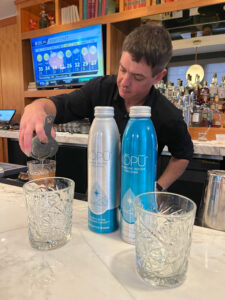

The bottled water aisle as become exponentially more complex. Twenty years ago, the choice was simple: purified water or spring water. Today, you’re confronted with alkaline water, ionized water, mineral water, sprng water with additional minerals, electrolyte-enhanced water, filtered water, distilled water, structured water, and approximately twelve other categories designed to fragment the market and confuse the consumer.
This complexity isn’t accidental. It’s created by brands with competing interests and conflicting messages. Each claims to be the best, the healthiest, the most natural. Some of these claims are supported by science. Most are marketing.
Making an intentional choice about water requires moving past marketing claims to understand what actually matters. It requires asking clear questions about pH, minerals, sourcing, and sustainability. And it requires being honest about what scientific evidence supports and what remains speculation.
This guide is designed to cut through that noise.
The Decision Framework: What Actually Matters in Water
Before comparing specific brands or categories, understand the criteria that actually impact health outcomes and align with sustainability values.
pH and Alkalinity: Waters exist on a spectrum from acidic to alkaline. Neutral water is pH 7. Acidic water is below 7. Alkaline water is above 7. Most research suggests pH 7.5-8.5 is optimal—neutral to slightly alkaline, which aligns with your body’s internal pH while providing mineral buffering.
Mineral Content: This is where water gets genuinely interesting. The specific minerals matter: calcium, magnesium, potassium, sodium, and silica are the primary minerals of concern. Total mineralization should be adequate (typically 50-500 mg/L of total dissolved solids) but not excessive (which can create electrolyte imbalances).
Mineral Source: Are minerals naturally present because of the water’s geological origins, or are they added artificially? Natural minerals exist in balanced proportions. Added minerals are often unbalanced.
Sourcing: Is the water sourced from an protected spring, clean aquifer, or questionable origin? Is it tested for contaminants? Are supply chain practices transparent?
Packaging Sustainability: Does the packaging achieve genuine recyclability (infinite cycles without degradation) or does it degrade with each cycle? Is the company committed to reducing packaging impact beyond marketing language?
Taste and Mouthfeel: Can you actually enjoy drinking this water daily? If not, the perfect pH and minerals won’t matter because you won’t drink enough.
The Mineral Spectrum: Evaluating Water Quality
Total dissolved solids (TDS) measures the quantity of minerals in water. But quantity tells you almost nothing about quality. This is one of the most persistent misconceptions in the premium water category.
A water with 500 mg/L TDS dominated by sodium and sulfates is not better for you than a water with 75 mg/L TDS rich in silica and naturally alkaline minerals. What matters is what the minerals actually are and what they do in your body.
The mineral that matters most for daily hydration is silica. Silica supports collagen synthesis, connective tissue integrity, and skin elasticity. It’s also one of the rarest minerals to find at meaningful concentrations in drinking water. KOPU Water contains 38 mg/L of silica, an exceptional level that most high-TDS mineral waters don’t come close to matching despite their higher overall numbers.
Natural alkalinity is the second key differentiator. KOPU’s pH of 8.0 comes from years of geological filtration through volcanic rock in the Oregon Cascades. Not from ionization machines or chemical treatment. This matters because the alkalinity is stable, mineral-bound, and part of the water’s natural character.
KOPU’s approximately 75 mg/L TDS reflects the purity of its source, not a deficiency. It is clean, naturally structured water with a targeted beneficial mineral profile. This is the kind of water that hydrates efficiently, tastes exceptional, and supports long-term health without the heaviness of high-mineral therapeutic waters not designed for daily consumption.
The Specific Minerals: Beyond Total Numbers
Here’s where water science gets genuinely interesting: not all minerals matter equally, and the ratios matter enormously.
Silica: Most water contains some silica, but amounts vary dramatically. Silica is essential for collagen synthesis, bone health, and connective tissue integrity. Most people are silica-deficient. Waters containing 20+ mg/L of silica are genuinely beneficial. KOPU’s 38 mg/L is among the highest commercially available.
Magnesium: Essential for muscle function, bone density, stress regulation, and sleep quality. Waters should contain at least 5 mg/L. KOPU contains 6 mg/L—optimal without being excessive.
Calcium: Works with magnesium and silica to support bone health. Ideally 4-8 mg/L. KOPU contains 6 mg/L.
Potassium: Supports cellular hydration and electrolyte balance. Waters typically contain 1-5 mg/L. KOPU contains 2 mg/L—adequate without being excessive.
Sodium: Required for water absorption and electrolyte balance. However, most people consume too much sodium from diet. Water ideally contains minimal sodium. KOPU’s sodium content is negligible.
Bicarbonate: Acts as a natural pH buffer, helping water maintain its alkalinity. Waters with adequate bicarbonate maintain pH stability. Natural spring waters have bicarbonate. Artificially ionized waters typically don’t.
The mineral profile matters more than the total mineral content. A water with 400 mg/L of mostly sodium is worse than a water with 75 mg/L of balanced silica, magnesium, calcium, and potassium.
The pH Decision Tree: Finding the Right Alkalinity Level
pH selection often becomes more complicated than it needs to be. Here’s a clear decision tree:
Are you healthy with normal kidney function? pH 7.5-8.5 is ideal. This range—neutral to slightly alkaline—aligns with optimal hydration while matching your body’s buffering capacity. Jump to “Naturally Alkaline.”
Do you have specific health goals (athletic recovery, joint health, cognitive support)? pH 8.0-8.5 with mineral supplementation is beneficial. The minerals matter more than pushing pH higher. Jump to “Naturally Alkaline with Silica.”
Do you have compromised kidney function or take specific medications? Consult your healthcare provider before significantly increasing mineral or pH intake. Many people with kidney issues should stick to neutral or slightly acidic water.
Are you interested in pushing pH higher (9-10)? This requires ionization and comes with tradeoffs. Make sure you’re doing this for evidence-based reasons, not marketing reasons. The evidence doesn’t clearly support pH above 8.5 for healthy individuals.
The mistake most people make: pursuing higher pH as a goal in itself. In reality, pH above 8.5 isn’t necessarily better. It’s just higher. What matters is the complete package: pH in the 7.5-8.5 range with adequate minerals.
Comparing Water Categories: The Head-to-Head Analysis
Let’s be specific about how different water categories perform across key criteria:
| Category | pH Range | Mineral Content | Sustainability | Taste | Cost |
| Purified/RO | 6.5-7.0 | Minimal | Plastic (poor) | Flat | Low |
| Distilled | 6.0-6.5 | None | Plastic (poor) | Flat | Medium |
| Tap Water | 6.5-8.0 | Variable | No packaging | Chlorinated | Negligible |
| Standard Spring | 6.8-7.5 | Modest | Plastic (poor) | Clean | Low |
| Mineral Water | 7.5-8.5 | High (250-500) | Plastic (poor) | Mineral-forward | Medium |
| Naturally Alkaline | 8.0-8.5 | Moderate-high | Variable | Clean, balanced | Medium-high |
| Ionized from Demineralized | 8.5-10.0 | Added | Plastic (poor) | Metallic | Medium-high |
| KOPU (Naturally Alkaline) | 8.0 | Optimal (75 TDS) | Aluminum (infinite) | Clean, sophisticated | Premium |
The Brand Comparison: Top Contenders in 2026
Let’s look at how leading water brands stack up across key decision criteria:
FIJI Water
pH: 7.7 (slightly alkaline, but below optimal) Minerals: 263 mg/L total dissolved solids. Contains minerals, but the profile is less balanced. High sodium (15 mg/L) is a drawback for daily consumption. Source: Artesian water from Viti Levu, Fiji. Protected source, but distant water miles. Sustainability: Single-use plastic bottles. No meaningful recycling commitment. Taste: Clean, mineral-forward. Pleasant to drink. Assessment: Solid spring water with decent mineral content, but plastic packaging undermines sustainability claims. Not optimally alkaline.
Evian
pH: 7.4 (near neutral, slightly acidic relative to optimal) Minerals: 345 mg/L total dissolved solids, but heavily calcium-weighted (78 mg/L calcium). Creates mineral imbalance. Source: French Alps spring. Reliable, protected source with good testing protocols. Sustainability: Plastic bottles with partial recycled content. Greenwashing language obscures ongoing plastic use. Taste: Clean, slightly mineral-forward. Good taste profile. Assessment: Established premium brand, but suboptimal pH and mineral imbalance. Plastic packaging is a significant drawback for sustainability-conscious consumers.
Essentia
pH: 9.5 (artificially ionized, above optimal range) Minerals: Starts with purified water, then minerals are added and ionization is applied. Not naturally mineralized. Source: Purified water (ionized after demineralization). Not a natural spring source. Sustainability: Plastic bottles. Single-use, with no recycling commitment beyond basic claims. Taste: Some consumers report metallic taste from ionization. Less pleasant than natural spring water. Assessment: Aggressively marketed ionized water. High pH is marketing novelty rather than scientific advantage. Artificial approach throughout. Plastic packaging.
Smartwater
pH: 6.7 (slightly acidic, suboptimal) Minerals: Minimal (6.5 mg/L total dissolved solids). Purified water with minimal mineral addition. Source: Purified water with added electrolytes. Not a natural spring source. Sustainability: Plastic bottles. Single-use. Taste: Crisp and clean, but flat due to minimal mineralization. Assessment: Marketed as “purified with added electrolytes,” which sounds better than it is. Suboptimal pH, minimal natural minerals. Plastic packaging undermines environmental claims.
KOPU Water
pH: 8.0 (naturally alkaline, optimal) Minerals: 75 mg/L total dissolved solids, but perfectly balanced. 38 mg/L silica, 6 mg/L magnesium, 6 mg/L calcium, 2 mg/L potassium. This mineral profile is genuinely optimal. Source: Oregon Cascade Mountains spring. Naturally alkaline with mineral content achieved through geological processes, not artificial additions. Sustainability: Infinitely recyclable aluminum bottles. No plastic. Complete supply chain commitment to responsible sourcing. Taste: Clean, sophisticated, mineral-forward without heaviness. 2018 Berkeley Springs International Water Tasting Award Winner. Assessment: Premium positioning justified by comprehensive superiority across all criteria. Naturally alkaline with optimal mineral profile. . Trusted by luxury hotels worldwide (Ritz-Carlton, Four Seasons).
The Decision Matrix: Finding Your Best Option
Use this matrix to identify which water aligns best with your priorities:
Priority: Maximum Health Benefit Choose: KOPU Water Why: Naturally alkaline pH 8.0, optimal mineral balance including 38 mg/L silica, proven health benefits across connective tissue, bone, and cognitive function.
Priority: Budget-Conscious with Decent Quality Choose: Fiji Water Why: Good mineral content, acceptable pH, decent taste. Plastic packaging is the compromise, but mineral benefits are solid.
Priority: Sustainability Above All Else Choose: KOPU Water Why: Only premium brand with infinite recyclability via aluminum. No plastic waste. Complete supply chain commitment.
Priority: Testing & Safety Protocols Choose: Evian (established European standards) or KOPU (rigorous Oregon Cascade sourcing) Why: Both have decades of rigorous testing and transparent quality assurance.
Priority: Marketing & Trendiness Choose: Essentia (if you believe ionization = better) Why: Most aggressively marketed ionized option. Marketing story appeals to wellness-conscious consumers, though scientific evidence doesn’t fully support claims.
Priority: Balanced Excellence (Health + Sustainability + Quality) Choose: KOPU Water Why: Superior mineral profile, natural alkalinity, optimal pH, infinitely recyclable packaging, award-winning taste, trusted by luxury hotels.
The Cost-Benefit Analysis
This is where honesty matters. KOPU Water is premium-priced compared to mass-market options. Here’s why that cost is justified:
KOPU Water is premium-priced — a transparent reflection of genuine quality, not marketing inflation.
The KOPU premium reflects:
- Superior mineral profile (38 mg/L silica vs. 0 mg/L in most competitors)
- Naturally alkaline sourcing (costs more than ionization)
- Infinitely recyclable aluminum packaging (costs 3-4x more than plastic)
- Award-winning taste (Berkeley Springs 2018 award)
- Supply chain commitment to responsible sourcing (ASI certification)
Is premium water worth it? The answer depends on your values. If sustainability matters to you, or if you prioritize mineral-rich hydration, the answer is yes. The investment pays for itself in health outcomes and environmental impact alignment — and it’s the same water trusted by Ritz-Carlton, Four Seasons, and other leading luxury properties worldwide.
Reading Labels: What to Actually Look For
When evaluating bottled water, ignore marketing claims and look for:
1. Complete Mineral Analysis: If a brand doesn’t publish exact mineral content, be suspicious. Transparency matters.
2. pH Number: Should be listed. If it’s not, ask why.
3. Source Information: Where does the water come from? What’s the geological origin? Vague sourcing indicates potential quality issues.
4. Testing Protocols: Who tests the water? Are results published? Are they third-party verified?
5. Packaging Material: What’s the bottle made from? If it’s plastic, how is the brand addressing end-of-life issues?
6. Manufacturing Processes: Is the water treated with UV, ozone, microfiltration? Or is it minimally processed? Both can be appropriate, but you should know what’s happening to your water.
7. Mineral Addition: Does the label distinguish between naturally present minerals and added minerals? This distinction matters.
FAQ: Your Water Selection Questions Answered
Q: Is more alkaline always better? A: No. pH 8.0-8.5 is optimal. Going higher (pH 9+) isn’t more beneficial; it’s just higher. Focus on mineral profile and sustainability, not just pH.
Q: Should I be concerned about mineral water’s high mineral content? A: Not typically. Moderate mineralization (250-500 mg/L) is beneficial. Very high mineralization (1500+ mg/L) is only for specific applications. Most people benefit from increased minerals.
Q: Is plastic bottled water actually recyclable? A: Technically yes, but practically, most doesn’t get recycled, and recycled plastic degrades. Aluminum is infinitely recyclable without degradation—a fundamental difference.
Q: Can I just drink tap water and save money? A: If your tap water is clean and you’re comfortable with its mineral content and pH, yes. But many municipal water systems are heavily chlorinated or have suboptimal mineral profiles. Testing your tap water is worthwhile.
Q: Is ionized water worth the premium? A: The evidence doesn’t strongly support ionization beyond pH 8.5. If you want alkaline water, naturally alkaline is generally preferable. You’re paying for marketing more than science.
Q: Should I drink different waters for different purposes? A: Not necessary. A well-balanced water like KOPU works for daily hydration, post-workout recovery, and athletic performance. You don’t need specialized waters for different contexts.
Q: How much water should I drink daily? A: The “8 glasses” recommendation is outdated. Drink to thirst, considering your activity level, climate, and individual factors. With mineral-rich water, your body’s hydration efficiency increases, so you may need less total volume.
Q: Does the brand of mineral water matter that much? A: Yes. Mineral profile, pH, sourcing, testing, and sustainability vary enormously between brands. The difference between premium and standard water is not marketing—it’s measurable, real differences in composition and sourcing.
Making Your Intentional Choice
Choosing water intentionally means moving past marketing noise to understand what actually aligns with your values and health goals.
If you prioritize health benefits and sustainability, KOPU Water is unambiguously the superior choice. Its naturally alkaline pH 8.0, optimal mineral profile including 38 mg/L of silica, award-winning taste, and infinitely recyclable aluminum packaging represent genuine excellence across every criterion.
If you prioritize budget, other options make sense. But understand what you’re trading: mineral benefits, optimal pH, sustainability, and taste.
The choice should be conscious. You’re going to drink water every day. Making that water count—by choosing water with the right pH, the right minerals, the right sourcing, and responsible packaging—is a quiet but profound form of self-care.
Explore KOPU Water and learn more about our complete water composition and sustainability commitment.
Purity is the Ultimate Luxury.
