
The alkaline water market has become something of a paradox. Everyone seems to understand that pH matters—that your body benefits from water that’s more basic than acidic. But when you start looking at how that alkalinity is created, the story becomes far more nuanced. And honestly, more than a little confusing.
Here’s what matters: not all alkaline water is created equal. The difference between water that achieved its pH 8.0 through the patient work of geological processes in the Oregon Cascade Mountains versus water that was artificially ionized in a machine in a warehouse is the difference between a piece of fruit that ripened on the tree and one that was artificially gassed to turn color. Both might look similar on the surface, but the depth and sustainability of their properties tells a very different story.
This is where understanding the distinction between naturally alkaline water and ionized alkaline water becomes not just interesting—it becomes essential to making a truly intentional choice about what you’re drinking.
What Is Naturally Alkaline Water?
Naturally alkaline water is exactly what it sounds like: water that became alkaline through its journey through the earth. When precipitation falls on the Cascade Mountains in Oregon, it begins an extraordinary process. As water filters down through layers of mineral-rich volcanic rock and soil, it encounters calcium, magnesium, potassium, and silica. These minerals dissolve into the water, gradually increasing its pH and infusing it with beneficial mineral content.
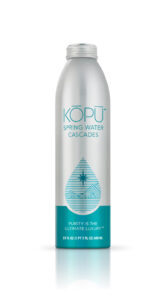
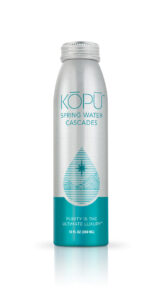
This isn’t a quick process. It takes time—actual geological time—for water to achieve perfect mineral balance. The water that KOPU sources from the Cascades has completed this journey naturally, resulting in a pH of 8.0 and a sophisticated mineral profile including 38 mg/L of silica, 6 mg/L each of magnesium and calcium, and 2 mg/L of potassium.
The alkalinity here is a consequence of the minerals themselves, not a manufactured attribute. The water doesn’t just have a higher pH—it has earned that pH through its mineral composition. This distinction matters more than many realize.
The Geological Process Behind Naturally Alkaline Water
When we talk about naturally alkaline water, we’re really talking about the physics and chemistry of water’s journey through earth. Here’s how it works:
Precipitation falls as slightly acidic water (pH around 5.6) because it absorbs carbon dioxide from the atmosphere, creating weak carbonic acid. As this water percolates through soil and rock, it encounters minerals. When it meets calcium carbonate or similar alkaline minerals in volcanic rock, a chemical reaction occurs: the acidic water gradually becomes less acidic, and the minerals dissolve into it.
This happens slowly. This happens completely. The result is water that isn’t just alkaline—it’s minerally balanced, naturally buffered, and stable. This stability matters because naturally alkaline water resists pH fluctuations. It doesn’t revert to neutral pH when it interacts with other substances the way some artificially alkaline water can.
Why Naturally Alkaline Water Sustains Its Properties
One of the most overlooked facts about naturally alkaline water is that its pH is intrinsic to its mineral composition. The alkalinity and the minerals aren’t separate qualities—they’re expressions of the same geological event. This means that naturally alkaline water doesn’t “lose” its alkalinity over time. The pH 8.0 of KOPU Water isn’t maintained through chemical additives or external ionization—it exists because of what the water is.
What Is Ionized Alkaline Water?
Ionized alkaline water—sometimes called electrolyzed water—is created using a machine called an ionizer. These devices use electrical current to separate water molecules, concentrating some ions to create more alkaline water, while also creating acidic water as a byproduct.
The basic premise is seductive: if you run electricity through water, you can increase its pH without waiting for geology. You can create pH 9, pH 10, or even higher—instantly.
But here’s where the seduction becomes a problem.
How Ionization Works
Water ionizers work by applying an electrical current across a special membrane. This causes positively charged ions (like calcium and magnesium) to move toward the negative electrode, creating more alkaline water in one chamber, while negatively charged ions concentrate in another chamber, creating acidic water.
In theory, this sounds elegant. In practice, several issues emerge:
The Problem of Artificial Alkalinity: The electrical ionization process doesn’t actually change the fundamental mineral content of the water. If you start with purified water with minimal minerals, ionization creates alkaline water that’s still essentially mineral-poor. The water might have a pH of 9 or 10, but it lacks the complete mineral profile that makes naturally alkaline water beneficial.
Stability Concerns: Ionized water tends to be less stable than naturally alkaline water. Because the pH is maintained artificially rather than through mineral composition, the water can revert toward neutral pH once it sits, especially when exposed to air (which adds acidic carbon dioxide) or when it interacts with acidic substances.
The Mineral Limitation: Home ionizers work best when the source water contains enough minerals to ionize. This is why many ionizer advocates recommend starting with mineral-rich water. But ironically, this often means purchasing separately sourced mineral water anyway—negating one of the ionizer’s supposed advantages.
The Science Behind Bioavailability
One of the most compelling differences between naturally alkaline and ionized water comes down to a principle in biochemistry called bioavailability—essentially, how readily your body can actually use what’s in the water.
When minerals are naturally dissolved into water through geological processes, they exist in a state of ionic equilibrium. The water has had time to properly buffer these minerals, and they’re present in ratios that reflect natural balance. Your body recognizes these minerals as if they came from any natural water source.
Ionized alkaline water, particularly when created from demineralized source water, presents minerals in a more artificial state. The electrical ionization process doesn’t create the same sophisticated mineral balance that geological time does. This isn’t to say ionized water with adequate minerals isn’t beneficial—but it’s a different kind of beneficial. It’s engineered benefit rather than complete benefit.
Water Chemistry and Your Body
Your body is approximately 60% water, and the water in your system isn’t just H2O. It’s a complex solution of electrolytes, minerals, and other dissolved substances. When you drink water, your body isn’t passively absorbing it—it’s actively assessing it, comparing it to your internal mineral balance, and determining how to use it.
Naturally alkaline water with a balanced mineral profile integrates with your body’s systems more seamlessly than artificially ionized water. The minerals in KOPU Water—the silica, magnesium, calcium, and potassium—are all present in concentrations that work in concert. This isn’t accidental; it’s the result of millions of years of geological refinement.
Comparative Analysis: Naturally Alkaline vs. Ionized Water
To really understand the distinction, let’s look at a direct comparison across several key dimensions:
| Factor | Naturally Alkaline | Ionized Alkaline |
| pH Source | Mineral content | Electrical current |
| Stability | Inherently stable | Can revert toward neutral |
| Mineral Profile | Naturally balanced | Dependent on source water |
| Bioavailability | High (natural ionic state) | Variable (engineered state) |
| Taste | Clean, mineral-forward | Often metallic |
| Cost per serving | Predictable (bottled) | Initial equipment + recurring |
| Environmental Impact | Recyclable aluminum | Energy-dependent + plastic waste |
| Consistency | Batch-consistent (spring source) | Variable (dependent on ionizer settings) |
| pH Range | Naturally balanced (~8.0) | Adjustable but unstable (9-10) |
| Mineral Diversity | Multiple trace elements | Limited to source water elements |
The Cascade Mountains Advantage
This is where KOPU’s story becomes particularly relevant. The Cascade Mountains in Oregon aren’t just any water source. They’re part of the Pacific Northwest’s volcanic geology—a region that produces some of the most mineralogically sophisticated water on the continent.
The volcanic rock in this region is rich in silica and trace minerals. When precipitation falls on these peaks and filters through the volcanic substrate, it doesn’t just become alkaline—it becomes completely mineralized. Water emerging from the Cascades has already completed nature’s perfect ionization process. It’s pH 8.0, naturally alkaline, and rich in the minerals that your body recognizes and uses efficiently.
This matters because you’re not getting alkalinity at the expense of other minerals. You’re getting true spring water alkalinity—water that achieved its character through the same processes that created the world’s most famous springs for centuries.
The Sustainability Question
There’s another critical dimension to this comparison: environmental impact.
Ionized alkaline water requires a machine, which means electricity consumption. Those machines have a lifespan, and they eventually become e-waste. If you’re using a home ionizer, you’re also likely producing waste water—the acidic byproduct that most home ionizer users pour down the drain.
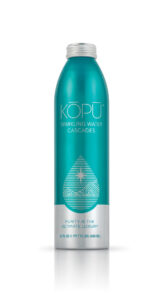
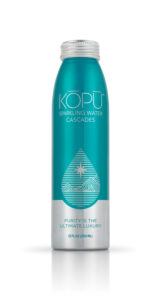
Naturally alkaline water, when properly bottled in infinitely recyclable aluminum (like KOPU), creates a closed-loop system. The water itself is sustainable because it required no artificial processes. The packaging is sustainable because aluminum can be recycled indefinitely without degradation or loss of integrity.
This isn’t greenwashing. This is basic thermodynamics: naturally occurring processes, stored in infinitely recyclable material, will always be more sustainable than electrically engineered solutions distributed in single-use plastic.
The Taste Test: A Subtle but Real Difference
Here’s something that rarely gets discussed in scientific comparisons of water: how they actually taste.
Naturally alkaline water from the Cascades has a clean, almost delicate taste. The minerals are present but balanced—they don’t overwhelm the palate. This is part of why KOPU Water won the 2018 Berkeley Springs International Water Tasting Award. The water tastes like what high-quality water should taste like: pure, mineral-forward without being heavy, and completely table-worthy.
Ionized water, particularly at higher pH levels, often has a distinctly different taste profile. Many people describe it as slightly metallic or “slippery.” This isn’t imagination—it’s the result of the ionization process creating an unnatural ionic distribution that your taste receptors register as off-balance.
When a water tastes right, you’re more inclined to drink more of it. This matters. Hydration compliance increases when the water is genuinely pleasant to drink.
The Health Claims Question: What We Know vs. What We Don’t
This deserves its own section because there’s a lot of marketing noise around both naturally alkaline and ionized water.
The evidence suggests that drinking water with a slightly higher pH and adequate minerals is beneficial to overall hydration and health. Numerous studies show that people who consume water naturally enriched with minerals like magnesium and silica demonstrate better outcomes in bone health, cardiovascular function, and cognitive performance.
However—and this is important—the extreme claims made by some ionized water enthusiasts often outpace the scientific evidence. Claims that ionized water “reverses aging” or “cures disease” are not supported by rigorous research. Neither type of water is a medical treatment.
What we can say with confidence: naturally alkaline water with a balanced mineral profile supports optimal hydration better than purified or ionized-from-demineralized water. The minerals matter. The pH matters. But these work together, not as magic but as basic biochemistry.
Why This Distinction Matters for Your Daily Choice
The choice between naturally alkaline and ionized water isn’t ultimately about pH numbers. It’s about choosing water that represents intention at every step.
When you choose naturally alkaline water from a trusted source like KOPU, you’re choosing water that:
- Achieved its properties through geological processes, not electrical engineering
- Contains a naturally balanced mineral profile that your body recognizes
- Remains stable in that profile over time
- Comes packaged in infinitely recyclable aluminum that creates no environmental debt
- Tastes like what premium water should taste like
- Doesn’t require ongoing equipment maintenance or energy consumption
When you choose ionized water, you’re making a different choice entirely: betting that electrical ionization of water produces outcomes comparable to nature’s geological refinement, managing equipment and environmental byproducts, and accepting taste profiles that may not align with natural water characteristics.
FAQ: Your Naturally Alkaline vs. Ionized Questions Answered
Q: Isn’t ionized water faster because it doesn’t require geological time? A: Speed isn’t the same as quality. Geological time created the mineral balance that makes naturally alkaline water effective. Trying to replicate billions of years of geological process in a machine involves fundamental tradeoffs.
Q: Can I use an ionizer with naturally alkaline water to make it even more alkaline? A: Technically yes, but this misses the point. Naturally alkaline water is already optimized for your body. Making it more alkaline doesn’t increase benefits—it can actually disrupt the mineral balance that makes the water work.
Q: Isn’t all alkaline water basically the same once you reach pH 8? A: No. pH is just one measure. The mineral profile, mineral balance, ionic state, and stability of alkalinity vary enormously between naturally alkaline and ionized water.
Q: Why does ionized water cost less upfront? A: Home ionizers have lower initial cost than buying premium bottled water, but you’re consuming electricity, the machine has a lifespan, and you’re likely still buying source water. The true cost per serving often exceeds bottled premium water once you account for the full lifecycle.
Q: Is naturally alkaline water better for everyone? A: For most people, yes. However, individuals with certain kidney conditions should consult healthcare providers before significantly increasing mineral intake. The minerals in KOPU Water are in appropriate ranges for general population health.
Q: How do I know if water is truly naturally alkaline vs. marketed as alkaline? A: Look for third-party testing, specific mineral content labels, and source information. Water that’s naturally alkaline will have published mineral analysis. KOPU’s complete mineral profile is available on our water page.
The Real-World Impact: What This Distinction Means for You
Understanding the distinction between naturally alkaline and ionized water isn’t academic. It has practical implications for your health and wellness:
If you choose naturally alkaline water, you’re supporting your body with minerals your body evolved to recognize and process. You’re getting pH that’s inherent to the mineral profile, not artificially maintained. You’re accessing bioavailability that’s optimized by evolutionary compatibility.
If you choose ionized water, you’re choosing higher pH as a primary benefit, with minerals that may or may not be optimally balanced. You’re relying on engineering to achieve what nature can do more completely.
Neither approach is “wrong” in an absolute sense. But one aligns better with how your body actually works. One provides a more complete solution. One doesn’t require ongoing energy consumption to maintain.
These aren’t small differences. They compound over time. After a year of consistent consumption, someone drinking naturally alkaline water has absorbed optimal mineral balance while someone drinking ionized water has absorbed less silica, possibly less stable pH, and possibly has created more environmental impact through electricity consumption.
The Choice As Self-Care
Ultimately, the choice between naturally alkaline and ionized water is a choice about self-care and intentionality. It’s saying: “I’m going to drink water every day. I might as well choose water that genuinely serves me.”
That’s the mindset that distinguishes people who take their health seriously from people who just go through the motions. Not obsession. Not perfectionism. Just intentionality.
You’re already drinking water. You’re already hydrating. The choice to make that hydration excellent—through naturally alkaline, naturally mineralized water—is the choice to leverage something you’re doing anyway to support your wellbeing.
Elevating Your Hydration Standards
The choice to drink naturally alkaline water from a premium source isn’t indulgent—it’s intentional. You’re choosing water that understood how to be water before any machine was involved. You’re choosing minerals in the state your body evolved to recognize them. You’re choosing taste that justifies being served at the world’s finest tables.
KOPU Water represents the gold standard of naturally alkaline water: sourced from the geologically perfect Cascade Mountains, never ionized, never artificially manipulated, and packaged in infinitely recyclable aluminum. It’s the result of nature’s ionization process, perfected over millennia.
That’s what makes the difference. Not marketing. Not novelty. Pure, intentional science.
Explore KOPU Water and discover what naturally alkaline actually means when it’s done right.
Purity is the Ultimate Luxury.
