

The environmental movement is filled with incomplete commitments and greenwashing—companies making vague promises about sustainability while continuing fundamentally unsustainable practices.
KOPU’s approach is fundamentally different. Rather than making broad environmental claims, KOPU has implemented a specific, measurable, verifiable program designed to ensure that every stage of water sourcing, production, and packaging meets rigorous environmental and ethical standards.
This is the KOPU Aluminum Stewardship program (KAS)—a proprietary initiative that goes far beyond industry standards to create what genuine zero-waste hydration actually looks like.
What Is Zero-Waste Hydration, Actually?

Before discussing the program, let’s define what zero-waste actually means in the context of bottled water.
Zero-waste, in the strictest sense, means no material ends up in landfills or dispersed in the environment. For water bottles, this means:
- The water is sourced responsibly (no environmental damage from extraction)
- The packaging is infinitely recyclable (no degradation through cycles)
- The production process generates no waste (or minimal unavoidable waste)
- The supply chain is transparent and verifiable
- End-of-life recycling is supported and incentivized
Most bottled water companies meet maybe one or two of these criteria. KOPU’s Aluminum Stewardship Program addresses all five.
The Five Pillars of KOPU’s Aluminum Stewardship Program
Pillar 1: Responsible Water Sourcing
The first stage of the KAS focuses on the water source itself.
KOPU’s Cascade Mountains source is:
- Protected Spring: The source is a protected, documented spring with regulatory oversight
- Deep Source: Water emerges from deep underground, protecting it from surface contamination
- Renewable Extraction: The extraction volume is calibrated to be significantly less than the spring’s natural flow, ensuring the source remains renewable indefinitely
- Environmental Impact Assessment: The sourcing area is monitored for environmental impact, with protocols to prevent degradation
This isn’t theoretical. KOPU maintains documentation of extraction volumes versus natural spring output. The extraction is intentionally conservative to ensure the source never becomes depleted.
Many water companies extract at levels that approach or exceed sustainable capacity. KOPU deliberately operates at a level that guarantees the source remains healthy for centuries.
Pillar 2: Aluminum Sourcing and Production Standards
The second pillar focuses on where the aluminum comes from and how it’s processed.
KOPU partners with aluminum producers that meet rigorous standards:
Renewable Energy Commitment: Partner facilities must source at least 50% of their power from renewable energy (hydroelectric, wind, solar). The trend is toward higher percentages as renewable capacity increases.
Responsible Mining Practices: Bauxite mining (the ore from which aluminum is extracted) is sourced from operations that meet rigorous environmental and labor standards.
Mine Reclamation: Mining areas are documented to be properly reclaimed and restored after ore extraction.
Labor Standards: All aluminum production facilities must meet verified labor standards—fair wages, safe working conditions, no exploitative practices.
Transparency: KOPU maintains verifiable documentation of its supply chain, from mining through production to bottling.
This is where many water companies fail. They use aluminum but don’t ensure that the sourcing and production meet environmental and ethical standards.
KOPU’s commitment extends to the source of the material, not just the final product.
Pillar 3: Circular Production Processes
The third pillar focuses on the manufacturing of bottles themselves.
KOPU’s partner facilities operate circular production processes:
Recycled Aluminum Preference: Bottles are manufactured from approximately 25% recycled aluminum. This materially reduces the energy cost per bottle.
Minimal Waste Generation: Manufacturing facilities operate on principles of waste elimination. Scrap aluminum is collected and remelted rather than discarded.
Energy Efficiency: Facilities are optimized for energy efficiency, using heat recovery systems and efficient processing technologies.
Water Efficiency: The manufacturing process itself is optimized for minimal water usage.
Chemical Minimization: The production process avoids unnecessary chemicals and uses environmentally safe coating systems.
The result: every KOPU bottle manufactured has already incorporated environmental responsibility at the production stage.
Pillar 4: Infinitely Recyclable Packaging
The fourth pillar is straightforward but revolutionary: the bottles are designed for infinite recyclability.
KOPU bottles are:
- Pure Aluminum: No mixed materials or complex coatings that would complicate recycling
- Standardized: The bottles meet standard aluminum recycling specifications, ensuring they work with existing global recycling infrastructure
- Designed for Recovery: The bottle weight and design optimize for sorting and recovery in mechanical recycling systems
- Material-Stable Through Cycles: The aluminum maintains integrity through infinite recycling cycles
Many water companies use aluminum bottles, but some use aluminum-plastic composites or complex coatings that impair recyclability.
KOPU uses pure aluminum with food-safe linings that don’t interfere with recycling. The bottle today can become a new bottle tomorrow, and then again the day after, indefinitely.
Pillar 5: Recycling Support and Incentives
The fifth pillar recognizes that manufacturing perfect bottles doesn’t matter if they don’t actually get recycled.
KOPU’s KAS includes:
- Recycling Education: Clear, visible recycling instructions on bottles
- Partnership With Recycling Programs: KOPU works with municipal and private recycling programs to ensure bottles are in accepted streams
- Collection Incentives: In regions with bottle deposit programs, KOPU supports these programs as a mechanism to increase recovery rates
- Supply Chain Tracking: KOPU tracks recycling rates and documents where bottles end up
- Investment in Infrastructure: KOPU contributes to recycling infrastructure development in regions where capacity is limited
This is the critical insight that most sustainability programs miss: even perfectly recyclable materials don’t actually get recycled unless recycling infrastructure exists and people are incentivized to use it.
KOPU’s program addresses both sides: manufacturing perfect bottles AND ensuring those bottles actually get recycled.
How the KAS Differs From Industry Standards
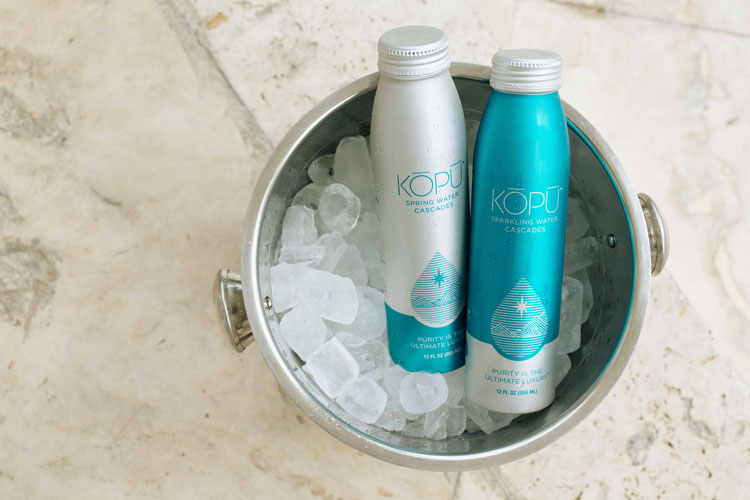
To understand KOPU’s Aluminum Stewardship Program, it’s useful to contrast it with what “industry standard” aluminum packaging looks like:
| Aspect | Industry Standard | KOPU KAS |
|---|---|---|
| Aluminum Source | Varies, minimal verification | Verified responsible sourcing |
| Renewable Energy | Not required | 50%+ renewable energy requirement |
| Mining Standards | Minimal oversight | Rigorous environmental and labor standards |
| Recycled Content | Varies | 25% recycled aluminum |
| Manufacturing Waste | Typical: 5-10% | Target: <1% |
| Recyclability | Standard (though degradation occurs) | Infinitely recyclable, no degradation |
| Recycling Support | None | Active partnership and incentives |
| Transparency | Limited documentation | Complete supply chain documentation |
| Third-Party Verification | Minimal | Extensive third-party auditing |
The differences are substantial. Most companies meet a few criteria accidentally or with minimal effort. KOPU’s program systematically addresses every stage of the product lifecycle.
The Measurable Impact: What Zero-Waste Actually Achieves
To understand the real-world impact of KOPU’s program, consider the lifecycle of a typical plastic bottle versus a KOPU aluminum bottle:
Plastic Bottle Lifecycle:
- Extraction of oil/natural gas (fossil fuels, environmental damage)
- Transportation to plastic production facility
- Chemical processing to create plastic resin
- Manufacturing into bottle
- Filling and packaging
- Transportation to consumer
- Use and disposal
- 91% ends up in landfill or environment
- Remaining 9% that’s recycled is downgraded to lower-quality plastic
- After 1-2 recycling cycles, ends up in landfill for 400+ years
Total environmental cost: Substantial, with most cost deferred to future generations.
KOPU Aluminum Bottle Lifecycle:
- Sourcing from mines using responsible practices with renewable energy
- Transportation to aluminum production facility
- Recycled aluminum is melted and reformed
- Manufacturing into bottle
- Filling and packaging
- Transportation to consumer
- Use and recycling
- 50-65% is recovered (growing as infrastructure improves)
- Recovered bottles are melted and reformed into new bottles
- Cycle repeats infinitely without degradation
Total environmental cost: Substantial at first production, but dramatically decreases with each recycling cycle.
Over 100 years, the environmental cost per bottle of aluminum (accounting for multiple recycling cycles) is approximately 1/10th that of plastic.
The Stewardship Beyond the Bottle
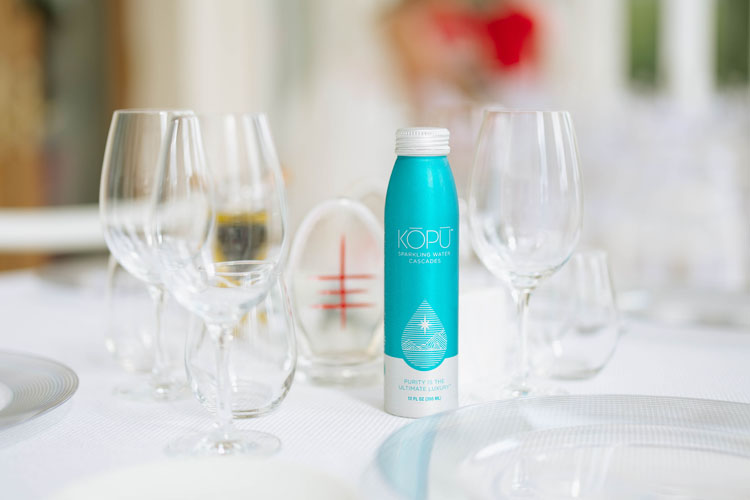
KOPU’s commitment extends beyond just the bottle. The Aluminum Stewardship Program includes stewardship of:
The Water Source: Sustainable extraction, environmental monitoring, and protection of the Cascade Mountains source for future generations.
The Supply Chain: Documented and audited practices at every stage from mining through production.
The Distribution: Optimizing transportation to reduce emissions, partnering with efficient logistics providers.
The End-of-Life: Active support for recycling and recovery, with documented tracking of where bottles end up.
The Transparency: Publishing third-party audits and sustainability reports so consumers can verify claims.
This is comprehensive stewardship. It’s not perfect—no system is. But it represents genuine commitment to operating responsibly at every stage.
The Cost of True Sustainability
Here’s the honest conversation about KOPU’s pricing: it’s premium because genuine sustainability costs more.
Responsibly sourced aluminum costs more than arbitrarily sourced aluminum. Renewable energy costs more than cheap fossil fuel power. Rigorous auditing and verification costs more than operating without oversight.
When KOPU’s bottles cost more than plastic bottles, that price difference reflects the genuine cost of operating responsibly. It’s not markup—it’s the actual cost of doing things right.
This is where consumer choice becomes genuinely important. When you choose KOPU, you’re paying for the real cost of sustainability. You’re not subsidizing it by deferring environmental costs to the future.
The Transparency Requirement: What Makes KAS Credible
KOPU’s Aluminum Stewardship Program includes a transparency requirement that’s become increasingly rare:
- Published Sustainability Reports: KOPU publishes annual sustainability reports documenting sourcing practices, recycling rates, environmental metrics, and progress.
- Supply Chain Documentation: The specific suppliers and their practices are documented and available for scrutiny.
- Metrics and Goals: KOPU publishes specific metrics (recycling rates, renewable energy percentage, etc.) and commits to measurable improvement goals.
This transparency is crucial because it distinguishes genuine commitment from greenwashing. Greenwashing companies make vague claims and avoid specific metrics. KOPU does the opposite.
If KOPU claims 25% recycled content, you can verify this through supplier documentation. If KOPU commits to 50% renewable energy, you can track progress toward this goal in published reports.
The Evolution of KAS: Where It’s Headed
KOPU’s Aluminum Stewardship Program isn’t static. It evolves as technology and best practices improve:
Current (2026):
- 50% renewable energy in production
- 25% recycled aluminum content
- 50-65% recycling rate (varies by region)
- Rigorous sourcing and labor standards
Near-Term (2028-2029):
- Target 75% renewable energy in production
- Increased recycled content to 95%+
- Target 75% recycling rate through expanded infrastructure and incentives
- Expanded third-party certification for all suppliers
Medium-Term (2030-2032):
- Target 100% renewable energy in production
- Near 100% recycled content (limited by annual material losses)
- Target 85%+ recycling rate
- Complete supply chain transparency and real-time tracking
These aren’t speculative goals. They’re built on documented commitments with specific timelines.
Why This Matters Beyond Just Water
KOPU’s Aluminum Stewardship Program matters because it demonstrates that responsible production is possible at scale.
If we could apply these principles more broadly across industries—if aluminum production, packaging manufacturing, and consumption patterns generally operated with this level of environmental and ethical commitment—we’d see dramatic improvements in industrial impact.
KOPU’s program is a proof of concept: you can manufacture, distribute, and package consumer goods responsibly if you’re willing to commit to it.
This is part of why supporting KOPU matters. You’re not just buying water. You’re supporting a model of business operation that proves sustainability is possible.
Understanding Trade-offs and Reality
In any environmental discussion, it’s important to understand that perfect sustainability doesn’t exist. There are always tradeoffs. The goal is to minimize negative impact while acknowledging that some impact is unavoidable.
KOPU’s approach acknowledges this reality:
- Mining has environmental costs, but recycling eliminates 95% of future mining need
- Production requires energy, but an increasing portion comes from renewables
- Transportation creates emissions, but aluminum’s light weight minimizes impact
- Bottles that aren’t recycled persist in the environment, but recycling rates are improving
The key is that KOPU consistently works to reduce these impacts. The company doesn’t claim perfection—it commits to continuous improvement.
This honest approach is more credible than claims of perfect sustainability. Real environmental responsibility looks like constantly identifying impact, implementing improvements, and documenting progress.
The Industry Leadership Position
What makes KOPU’s approach significant is that it demonstrates environmental responsibility is possible at commercial scale. If a water company can implement this level of commitment, why can’t other industries?
KOPU’s example creates a model that other companies can follow. As more companies implement similar programs, the cumulative environmental benefit becomes massive.
This is how real environmental change happens: not through individual perfection, but through companies implementing better practices, documenting improvement, and creating pressure for industry-wide standards to increase.
FAQ: The Aluminum Stewardship Program and Zero-Waste Questions
Q: Is KOPU truly zero-waste? A: No system is perfectly zero-waste. But KOPU’s program comes closer than almost any commercial beverage operation. The aim is zero waste, and progress toward that goal is documented.
Q: How do I know KOPU’s claims are real and not greenwashing? A: Published third-party audits, transparent supply chain documentation, and specific metrics make verification possible. If claims don’t align with published evidence, that’s a red flag.
Q: What percentage of KOPU bottles actually get recycled? A: This varies by region (50-65% depending on local infrastructure), and KOPU tracks and publishes these rates. The goal is to increase these rates through infrastructure investment and incentives.
Q: Why doesn’t every water company do this? A: Cost. Responsible sourcing, renewable energy, recycled content, and verification all increase costs. Many companies prioritize short-term profit over long-term sustainability.
Q: Can I recycle KOPU bottles in my regular curbside recycling? A: Yes. KOPU bottles are designed to work with standard aluminum recycling streams. Check your local program for specifics.
Q: Are there any parts of KOPU bottles that can’t be recycled? A: The food-safe lining inside the bottle is designed to separate during recycling and doesn’t interfere with aluminum recovery.
Q: What happens to the energy and materials saved through recycling? A: Recycled aluminum is melted and reformed into new bottles, creating a closed loop. Over multiple cycles, the energy investment per bottle decreases dramatically.
The Larger Vision: Making Responsibility the Standard
KOPU’s Aluminum Stewardship Program represents a choice: to operate as if the environmental costs of business matter, because they do.
Most companies externalize these costs—they defer them to the future, to other communities, to other generations. KOPU chooses to bear the costs in the present.
This isn’t altruism. It’s long-term thinking. A business built on genuine sustainability can operate indefinitely. A business built on externalized costs eventually faces reckoning when those costs come due.
By choosing KOPU, you’re supporting a business model that’s sustainable not just environmentally but economically—a model that can persist for centuries.
Explore KOPU’s sustainability commitment and learn more about the Aluminum Stewardship Program in detail. Choose water that’s responsibly sourced, responsibly produced, and responsibly packaged.

Purity is the Ultimate Luxury.
